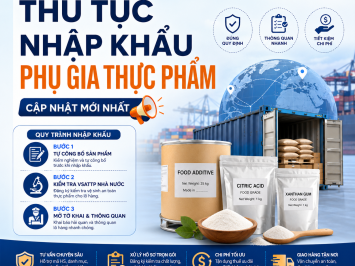


Since Decree 24/2026/ND-CP officially came into effect, the import of chemicals—especially those listed under Appendix II (chemicals subject to conditional production and trading)—has been more strictly regulated to ensure safety, security, and risk control in chemical usage.
Importing enterprises that fail to understand the regulations, obtain the required certificates, or properly prepare documentation may face customs clearance refusal, administrative penalties, and significant additional costs.
I. LEGAL BASIS
-
Law on Chemicals
-
Decree 24/2026/ND-CP
-
Appendix II – List of chemicals subject to conditional production and trading
-
Guiding documents issued by the Ministry of Industry and Trade
II. LEGAL REQUIREMENTS FOR IMPORTING CHEMICALS UNDER APPENDIX II
For enterprises importing chemicals for production or trading:
-
Certificate of eligibility for chemical production and trading (Article 9 of Decree 26/2026/ND-CP)
For enterprises importing chemicals for internal use:
-
Declaration of intended use (Article 10 of Decree 26/2026/ND-CP)
III. COMPETENT AUTHORITY
-
Ministry of Industry and Trade (MOIT)
-
Processing authority: Vietnam Chemicals Agency (VINACHEMIA)
📌 Applications are not submitted via the National Single Window (NSW) but through the Ministry of Industry and Trade’s licensing system.
IV. IMPORT DOSSIER FOR CHEMICALS (APPENDIX II)
1. Mandatory Documents
Enterprises must prepare:
-
Certificate of eligibility for chemical production/trading or declaration of use
-
Sales Contract / Commercial Invoice
-
Packing List
-
MSDS (Material Safety Data Sheet)
-
Bill of Lading
-
Certificate of Origin (if any)
-
Business Registration Certificate
-
Report on import demand and intended use
2. Key Documentation Requirements
-
Chemical name must be 100% consistent across:
-
Invoice
-
MSDS
-
Licensing documents
-
-
Must include:
-
CAS Number
-
Clear origin of goods
-
-
Intended use must be:
-
Specific and lawful
-
-
Storage and safety conditions must comply with regulations
V. IMPORT PROCEDURE FOR CHEMICALS (APPENDIX II)
Step 1: Identify whether the chemical is listed in Appendix II
Check:
-
Chemical name
-
CAS Number
-
Compare with Appendix II of Decree 24/2026/ND-CP
Step 2: Apply for required certificate or submit declaration
-
Submit application electronically to the Ministry of Industry and Trade
-
Monitor processing status
Step 3: Application review
-
Processing time: 14–25 working days
-
Authorities may request:
-
Additional documents
-
Detailed explanation of intended use
-
Step 4: Issuance of certificate
-
Electronic certificate issued
-
Validity depends on the type of chemical
-
Required for customs declaration
Step 5: Customs clearance procedures
-
Submit customs declaration
-
Attach:
-
Import permit / certificate
-
MSDS
-
Full set of import documents
-
-
Proceed with customs clearance
VI. COMMON MISTAKES
❌ Failure to obtain a permit for chemicals listed in Appendix II
❌ Non-compliant or incomplete MSDS
❌ Inconsistent chemical names across documents
❌ Missing business lines related to chemicals
❌ Applying for a permit only after goods arrive at port
➡️ Consequences: cargo delays, storage and demurrage costs, administrative penalties
VII. WHEN TO APPLY FOR IMPORT PERMIT
⏱️ At least 10–14 days before shipment
⛔ Do not wait until goods arrive at port
VIII. RECOMMENDED SOLUTIONS FOR ENTERPRISES
For chemicals subject to conditional business requirements, enterprises should:
-
Verify legal requirements at the quotation stage
-
Standardize documentation before signing contracts
-
Work with experienced logistics/legal service providers
👉 Proper preparation from the beginning helps save time, reduce costs, and avoid legal risks.
Contact us now for a FREE consultation!
SONGWIN INTERNATIONAL LOGISTICS VIETNAM CO., LTD
📍 Address: 344 Nguyen Trong Tuyen Street, Tan Son Hoa Ward, Ho Chi Minh City, Vietnam
📞 24/7 Hotline: 083.681.3969 - 0373.262.105
📧 Email: Sales2@songwinlog.com
Songwin Logistics – Trust Builds the Brand, Professionalism Drives Success.

![[Detailed Guide] Procedure for Obtaining a Certificate of Eligibility for Conditional Chemical Trading](https://www.songwinlog.net/thumbs/355x266x1/upload/news/bai-dang-instagram-thong-bao-lich-nghi-tet-2026-cao-cap-toi-gian-do-vang-1-3608.png)